
Total or Partial Knee Replacement
Dr. Geller takes an innovative approach to total knee replacement, using a variety of minimally invasive techniques and the newest, proven materials to achieve optimal results.
What is Total or Partial Knee Replacement Surgery?
Total or partial knee replacement surgery, or knee arthroplasty, may be recommended for advanced stage arthritis that does not respond to nonoperative treatments. It may offer pain relief and improved range of motion for patients. In these cases, the knee cartilage may be worn down, creating an uneven or pitted surface. This condition can cause knee pain, and tightness—and even a change in body's alignment.

What is the Different Between Total and Partial Knee Replacement Surgery?
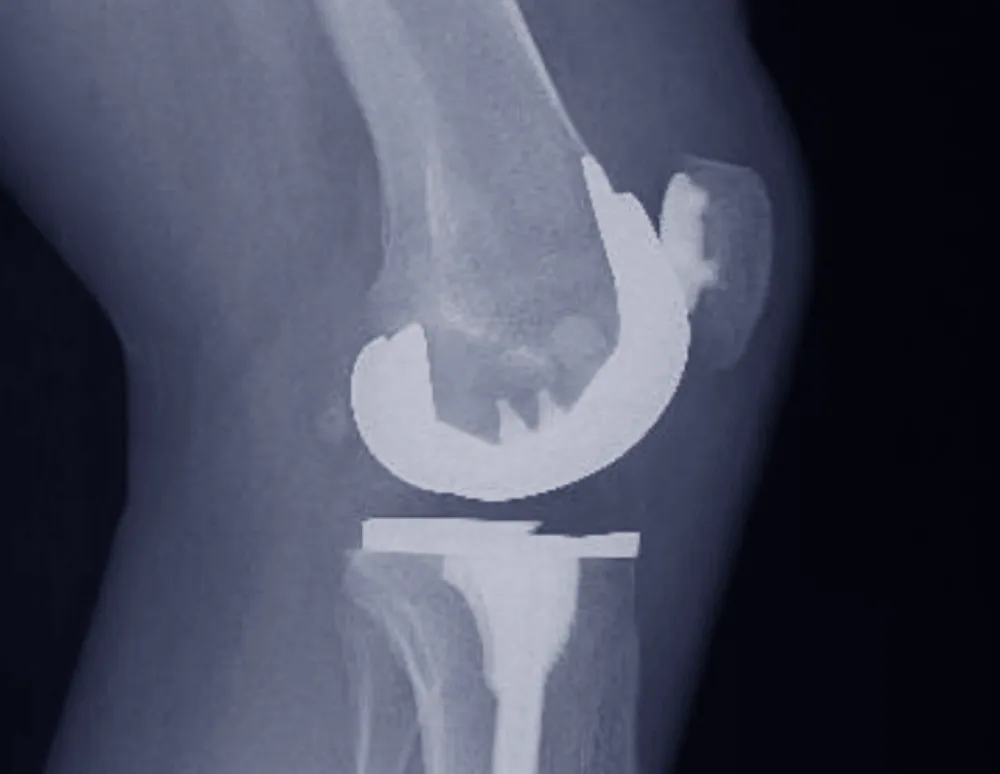
Total knee replacement (TKR) surgery is a procedure in which the damaged bone and cartilage of the knee are replaced with an artificial joint. Most of the ligaments and all of the tendons remain intact, allowing the knee to function properly. Knee replacement implants are constructed of metal and plastic. This procedure helps the knee to regain its intended functionality with decreased pain.
Partial knee replacement surgery addresses only the degraded areas of a patient's knee.
Minimally Invasive Surgery Options
Traditionally, an incision several inches long is created with performing a partial or total knee replacement. A newer technique, minimally invasive surgery uses small incisions and specialized equipment and techniques. The result is less blood loss, reduced pain and minimized scarring. The other benefit is a quicker recover time, getting patients back to their normal lives as soon as possible. The minimally invasive procedure is not appropriate for all knee replacement patients. Dr. Geller will recommend the technique that will produce the best outcome for you.
Before and After Your Surgery
Knee replacement surgery usually requires a stay in a hospital for several days. Your stay length may vary depending on your specific case and needs. Dr. Geller will explain the procedure to you in detail. He will also ask if you have any questions about the surgery. Knee replacement is done under general anesthesia or spinal anesthesia. Your anesthesiologist will discuss this with you before you have your surgery.
After Dr. Geller performs the operation, the incision will be closed with either stitches or surgical staples. A drain may be inserted to help excess fluid drain out of the area.
After surgery, you will be monitored in the recovery room. Once you are awake and your vital signs, like blood pressure and breathing, are stable, you will be moved to your hospital room for further recovery.
It is important to get the new joint moving as soon as possible after surgery. To help with that, a physical therapist will meet with you and plan a rehabilitation program to help you get back on your feet. A special piece of equipment, called a continuous passive motion machine, may be used to help move your knee through its full range of motion while you rest in bed. You will follow the exercise plan in the hospital, and the exercise program will help you transition home as well.
After surgery, you will also see Dr. Geller for a follow-up visit.

Related Procedures
Robotic Knee Replacement Surgery
Robotic knee replacement involves building a virtual image of the patient's existing knee anatomy into the computer. This patient-specific model helps the surgeon know what to expect and allows Dr. Geller to make a customized plan before doing any work on the patient's knee.
Revision Knee Replacement
During revision surgery, an orthopedic specialist removes all or part of an older artificial knee that has failed—or needs replacement for other reasons—with a new one. Unfortunately, more than 40,000 patients in the US every year need to undergo revision of a previous knee replacement that isn't functioning properly.


